


Probiotics Powder
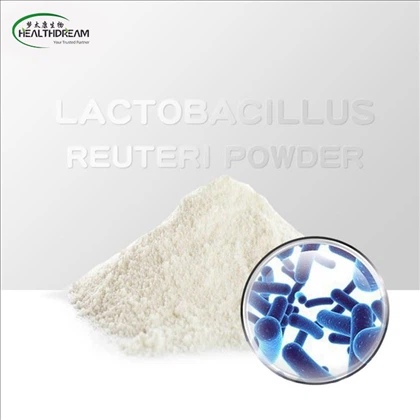
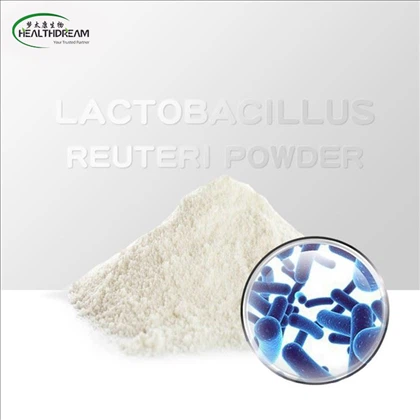






Lactobacillus Reuteri Powder
Lactobacillus reuteri is a probiotic naturally present in the human intestinal tract and breast milk. Famous for producing reuterin, it possesses broad-spectrum antibacterial activity. It helps regulate intestinal flora, relieve infant colic, improve cons
Description


How to choose Lactobacillus reuteri?
About Lactobacillus reuteri, the key is to match strains with corresponding health benefits, rather than merely focusing on viable cell count.
Infant colic / functional abdominal pain: DSM 17938 is the first-choice strain. Clinical evidence proves that only 100 million CFU per day can significantly reduce infant crying duration. It is recommended by ESPGHAN and approved for use in infant formula foods.
Bone health, anti-aging and metabolic regulation: Choose ATCC PTA 6475. Clinical trials show that 10 billion CFU daily slows bone loss in elderly women and improves metabolic inflammation, ideal for middle-aged & elderly health and anti-aging products.
Adjuvant management of Helicobacter pylori: DSM 17648 is highly recommended. This strain eliminates Helicobacter pylori via physical binding and remains effective even after inactivation. Clinical studies confirm it improves eradication rate of triple therapy, suitable for stomach health formulations.
In addition, always verify suppliers’ strain identification reports (16S rRNA), viable counts at the end of shelf life, and regulatory compliance in target markets (such as China’s official strain list for infant foods).

| Product Name: | Lactobacillus reuteri Powder |
| Strain name: | Lactobacillus reuteri |
| Strain identification: | Characteristic by API 50CH & 16S rDNA |
| Type: | Freeze dried powder |
| Packing: | 1kg/bag, 5kg/bag in cold-chain package |
| Storage: | Package sealed at 4℃ or refrigeration - 18℃ |
| Shelf life: | 24 months from date of production |
| Certfication: | NSF, HACCP, ISO9001, Kosher, HALAL |
| Documents support: | Genetic identification report |
| IDA deposit certificate | |
| Certificate of analysis | |
| Stability study report | |
| Anti-bile salt & Anti gastro-acid study report | |
| Antibiotic sensitivity test certificate | |
| Safety study report | |
| Microbial Enumeration method |

| Descrption: | Fine powder, no caking, no abnormal odor, no visible foreign bod |
| Color: | White to light yellow |
| Mositure: | NMT 5.0% |
| Water activity: | < 0.12% |
| Viable cell count: | NLT 200 billion cfu/gram |
| Non LAB count: | < 5000 cfu/g |
| Yeast &mould: | NMT 50 cfu/g |
| Coliform: | < 10 cfu/g |
| Pathogenic bacteria: | Negative |
| Lead(Pb): | NMT 0.5 mg/kg |
| Arsenic(As): | NMT 0.5 mg/kg |
| Cadmium(Cd): | NMT 1.0 mg/kg |
| Mercury(Hg): | NMT 0.1 mg/kg |

1. Relieve Infant ColicStrain DSM 17938 has been clinically verified in multiple trials. Daily intake of 1×10⁸ CFU significantly reduces crying duration in breastfed infants (from 268 minutes to 115 minutes). It is recommended by ESPGHAN for colic management.
2. Prevent and Alleviate Functional Abdominal PainDSM 17938 is also suitable for children aged 4–18 with functional abdominal pain. It reduces the frequency and severity of abdominal pain and improves quality of life.
3. Support Bone Health and Anti-AgingAfter 12 months of daily supplementation with 1×10¹⁰ CFU of strain ATCC PTA 6475, bone loss in postmenopausal women is notably slowed (tibial volumetric BMD change: -0.83% vs. -1.85% in placebo group). It also improves inflammatory status and insulin sensitivity.
4. Assist Helicobacter pylori EradicationStrain DSM 17648 specifically binds to Helicobacter pylori and blocks its adhesion to gastric mucosa. Clinical data show that combined with triple therapy, it raises the eradication rate from 68.9% to 91.1%. Inactivated bacteria remain effective.
5. Maintain Women’s Urogenital HealthStrain RC-14 is often compounded with Lactobacillus rhamnosus GR-1. It inhibits vaginal pathogens including Candida albicans and Gardnerella vaginalis, restores vaginal microecological balance and prevents bacterial vaginosis.
6. Regulate Intestinal Flora and Relieve ConstipationLactobacillus reuteri produces antibacterial substances such as reuterin to suppress pathogenic bacteria and promote the growth of beneficial flora. Meanwhile, it stimulates intestinal peristalsis via short-chain fatty acids and improves functional constipation.

1. Production of ReuterinLactobacillus reuteri is the only probiotic capable of producing reuterin, a substance with broad-spectrum antibacterial activity that inhibits Gram-positive bacteria, Gram-negative bacteria, fungi and protozoa.
2. High Strain SpecificityFunctions vary drastically among different strains. DSM 17938 targets infant colic, ATCC PTA 6475 focuses on bone health, DSM 17648 acts against Helicobacter pylori, and RC-14 supports women’s health. The right strain matters far more than choosing the bacterial species.
3. Excellent Acid and Bile Salt TolerancePremium strains such as LR-64 maintain an 81% survival rate after 4 hours at pH 3.0, and approximately 39% survival rate after 4 hours in 0.2% bile salt solution, allowing them to pass smoothly through the gastrointestinal tract.
4.Outstanding Freeze-Drying StabilityFreeze-dried powder retains 86% viability after 24 months at 4°C and 93% viability at -18°C. Microencapsulation technology can further raise its survival rate during simulated gastrointestinal digestion to 89%.

Q1: What are the most well-known strains of Lactobacillus reuteri?
A: DSM 17938 (colic / abdominal pain), ATCC PTA 6475 (bone health / metabolism), DSM 17648 (Helicobacter pylori), RC-14 (women’s health), NCIMB 30242 (cholesterol reduction).
Q2: What is an adequate viable count of Lactobacillus reuteri?
A: It varies by purpose: only 1×10⁸ CFU/day for infant colic; 1×10¹⁰ CFU/day for bone health; 1×10⁹–1×10¹⁰ CFU/day for daily adult maintenance. Strain quality matters more than CFU quantity.
Q3: Can Lactobacillus reuteri relieve infant colic?
A: Yes. DSM 17938 is recommended by ESPGHAN. Clinical studies show infant crying time is reduced from 268 minutes to 115 minutes.
Q4: Is Lactobacillus reuteri effective against Helicobacter pylori?
A: Yes. DSM 17648 eliminates Helicobacter pylori via physical binding. Combined with triple therapy, it raises the eradication rate to 91.1%. Inactivated strains are also effective.
