


Plant Extract Powder
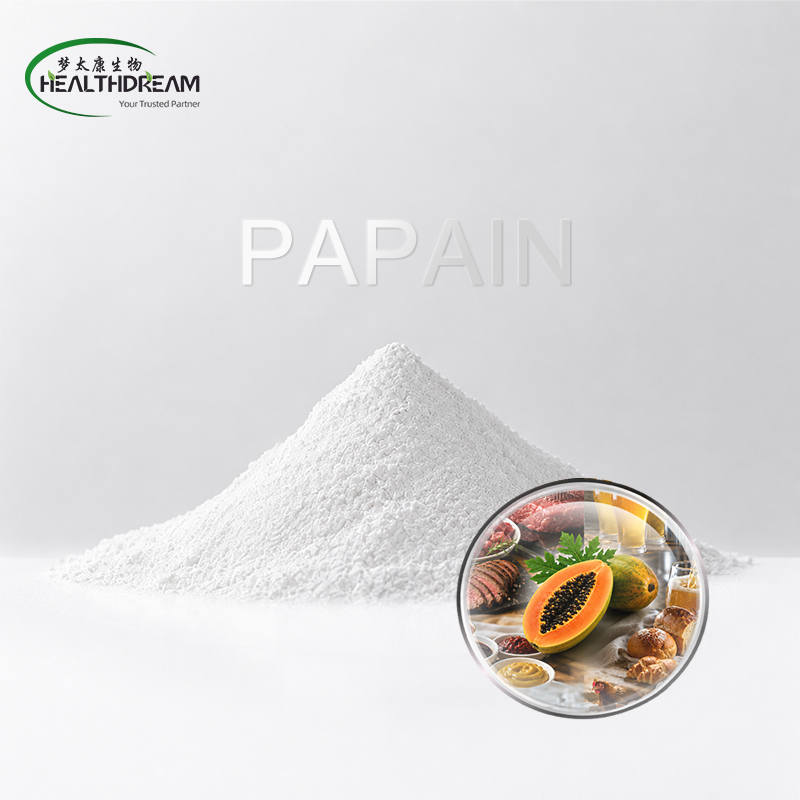
papain
Papain is a natural biological enzyme preparation extracted from the unripe fruit pulp of papaya (Carica papaya) through bioengineering technology. It is mainly composed of various proteolytic enzymes such as papain, chymopapain A, chymopapain B, papaya p
Description

What does the amount and activity of papain isolated from the different parts of the papaya plant dependent on?
The amount and activity of papain isolated from the different parts of the papaya plant vary depends on the age of the tree and whether it is male or female. For example, higher quantities of crude papain may be extracted from female trees compared with male trees and from older fruits compared with younger fruits. However, papain extracted from young papaya fruit produced by female trees typically is more active than that extracted from old fruit produced by male or hermaphrodite plants.

| Product Name: | papain |
| Synonym : | Carica papaya enzyme |
| CAS: | 9001-73-4 |
| EINECS: | 232-627-2 |
| Product Appearance: | White to light yellow powder |
| Product Specifications: | 100,000U/g |
| Grade: | Food Grade |
| Ingredients List: | Papain、Glucose |

| Appearance |
White Powder |
| Odor |
Free of offensive odors |
| Mesh |
98% pass 80mesh |
| Activity of enzyme |
100,000 u/g |
| Loss on drying |
≤5.0% |
| Loss on ignition |
≤5.0% |
| Heavy metals |
<20mg/kg |
| Pb |
<2.0mg/kg |
| As | <2.0mg/kg |
| Total Plate Count |
<10,000cfu/g |
| E.Coli |
Negative |
| Salmonella |
None detected in 10g |
| Yeast and Mould | <100cfu/g |

1. Meat Processing
Papain acts on muscle fibers and collagen, breaking them down into small-molecule peptides or amino acids. This alters the tissue structure and texture of meat, facilitating subsequent processing steps.
2. Beer Clarification
During beer brewing, papain further breaks down proteins to generate additional peptides and amino acids. This helps enhance beer clarity and stability while improving mouthfeel. Adding an appropriate amount during frozen storage can yield optimal clarification results.
3. Baking Industry
Papain proteins in flour, reducing dough gluten strength. This aids in product shaping and helps reduce defect rates. Additionally, the short peptides and amino acids produced through hydrolysis undergo Maillard reactions with sugars, influencing product flavor and allowing for adjustments in oil and sugar formulations.
4. Condiment Production
Papain is used to animal and plant proteins from sources such as meat, soybeans, and mushrooms. The resulting are suitable for producing condiments like chicken essence, oyster sauce, soy sauce, and mushroom extract.
5. Pharmaceutical & Healthcare
In the pharmaceutical and healthcare sectors, papain is primarily used to specific animal and plant proteins into peptides or amino acids. It is applied in the production of products such as collagen peptides, soybean peptides, and amino acid oral solutions.
6. Feed Processing
When added to feed, it helps improve nutrient bioavailability. Formeat protein by-products, helping to reduce viscosity in the final product while improving its texture and flavor. This makes it highly suitable for the production of high-quality pet food.

1.Unique Sulfhydryl-containing Endopeptidase Mechanism
The active center of papain contains cysteine (Cys-25), classifying it as a typical sulfhydryl (-SH) peptide endopeptidase. This specific catalytic dyad structure enables precise recognition and cleavage of specific peptide bonds within proteins, demonstrating high biocatalytic specificity.
2.Dual Proteolytic and Esterase Activity
Beyond its excellent proteolytic capabilities, this enzyme exhibits significant esterase activity. This dual catalytic property greatly expands its application boundaries, allowing it to demonstrate strong efficacy when processing complex substrates such as animal and plant proteins, polypeptides, esters, and amides.
3.Excellent Thermal Stability and High Enzymatic Activity
Maintains exceptionally high enzymatic activity under standard processing temperatures with strong heat resistance, minimizing deactivation due to environmental fluctuations. This stable physicochemical property ensures high conversion rates during continuous industrial production, helping enterprises reduce costs and enhance batch consistency.

Q1: What is the specific enzyme activity and purity of your Papain?
A:Our food-grade Papain features a standard enzyme activity of 100,000 U/g.It appears as a white powder with a characteristic papaya aroma.We strictly adhere to ISO 9001 and FSSC 22000 quality control standards to ensure high stability and consistent performance for various industrial applications.
Q2: How does Papain function in the food processing industry?
A:As a natural cysteine protease, Papain effectively large protein molecules into small peptides and amino acids. In the food industry, it is widely utilized as a meat tenderizer, biscuit softener, dough conditioner, and clarifying agent for beverages like beer and wine, helping to improve texture and product quality without compromising safety.
Q3: Do you offer OEM services or customized pre-mix solutions for this ingredient?
A:Yes, leveraging our 10 years of R&D expertise, we provide comprehensive OEM services and support customized production for various dosage forms. We can tailor pre-mix blends according to your specific formulation requirements, ensuring seamless integration into your final health and wellness products.
Q4: Can you provide technical documentation and Certificates of Analysis (COA)?
A:Certainly. As a professional supplier, we provide detailed COAs, MSDS, and other necessary export documents for every batch.
Q5: How does Papain contribute to improving biscuit and bakery product quality?
A:In baking, Papain reduces dough wet gluten strength and improves plasticity. This facilitates the Maillard reaction, resulting in faster browning, an appealing golden color, and a crispier texture. It also helps reduce breakage rates and allows for a reduction in certain chemical additives, leading to cleaner labels.
